Avena Sativa
Avena Sativa
Avena Sativa - Oat
Common oat – with the botanical name Avena sativa – is the most widely cultivated oat species and today accounts for more than 75% of the oats grown globally. The plant is an annual grass belonging to the genus Avena, growing between 50 and 120 cm tall, and is part of the grass family Poaceae (formerly called Gramineae). Oats are believed to have originated as a cereal crop in Europe and have been cultivated since the Bronze Age – the oldest archaeological findings are around 3,000 years old and originate, among other places, from Switzerland. Initially, oats most likely appeared as a weed in ancient wheat fields before later becoming an independent crop.
Compared with other cereals such as wheat, barley and rye, oats generally require cooler summers and more water, making them particularly well suited for cultivation in regions such as Northwestern Europe. Today, oats are mainly grown in Russia, Canada and across Europe.
When oats are discussed in cosmetic, food and health contexts, it is primarily the grain – also called the oat kernel – that is of interest. The oat kernel is the grain itself without the outer inedible hull, which is mainly used for animal feed. The kernel consists of three main parts:
- The bran on the outside, which accounts for approximately 30% of the kernel’s dry weight and mainly contains proteins, B-vitamins, minerals and a large proportion of the grain’s dietary fibre – including part of the kernel’s content of beta-glucans.
- The endosperm, which makes up the majority of the kernel (55–70%), contains mainly starch and proteins. Just beneath the bran layer and forming the outer layer of the endosperm is the so-called aleurone layer – this layer contains most of the oat kernel’s beta-glucans.
- The germ constitutes about 3% of the oat kernel and mainly contains lipids (fats), proteins and E- and B-vitamins.
In addition to its use in foods, dietary supplements and cosmetics, whole oats are also widely used as animal feed. Oat straw is also used as bedding in stables, where one particular advantage compared with, for example, wheat straw is its superior ability to absorb moisture.
Oats have held a place in traditional medicine for centuries. As early as Roman times, oats were described as soothing and protective for dry, itchy and inflamed skin. The use of oats in skin care therefore has deep historical roots. Today, studies indicate that regular consumption of oats may lower levels of LDL and total cholesterol in the blood and reduce the risk of cardiovascular disease. This effect is primarily attributed to the content of beta-glucan.
PUCA PURE & CARE uses Avena sativa Kernel Extract with a high content of oat peptides and beta-glucans in some of their products.
Composition and Properties of Oat
The oat kernel has a complex composition of carbohydrates, lipids, proteins and a range of bioactive plant compounds, which gives rise to the many interesting properties described in the literature. In the following, the largest and most health-relevant groups of oat phytochemicals will be reviewed, starting with the group that constitutes the majority of the grain.
Carbohydrates
Carbohydrates constitute about 66–70% of the oat kernel. Of this, approximately 85% is starch, about 11% dietary fibre, and around 3–4% sugars in the form of monosaccharides such as glucose, mannose and fructose. The starch consists almost exclusively of amylose and amylopectin. Approximately 60% of the 11% fibre fraction consists of insoluble fibres, mainly arabinoxylans, while the remaining 40% of the fibres are soluble – primarily the characteristic beta-glucans.
Beta-glucans are soluble and fermentable dietary fibres that constitute about 4–5% of the dry weight of the grain. These substances are also referred to as oat mucilage and have a high water-binding capacity, whereby in water they form a viscous gel or liquid depending mainly on molecular weight and concentration. The chemical structure of beta-glucans is illustrated in Figure 1 and can be described as follows: they are glucose polysaccharides composed of glucose units linked via beta-1,3 and beta-1,4 bonds in a linear chain without branching. Approximately 30% of the bonds are beta-1,3 and about 70% are beta-1,4. The molecular weight of beta-glucans in oats varies considerably, but they are generally large molecules of around 200–2000 kDa1. The structure gives the molecule a relatively high degree of flexibility, which is believed to be important for both its water solubility and its properties in the skin.
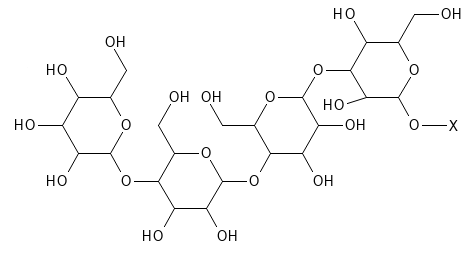
Figure 1: A representative fragment from one end of the chemical structure of oat beta-glucans, which are linear glucose polysaccharides typically containing more than 1,000 glucose units. The first four glucose units are shown, linked by two β-1,4-glycosidic bonds, while the bond to the glucose unit on the right is a β-1,3-glycosidic bond. X indicates continuation of the glucose chain. The stereochemistry (three-dimensional structure) is not specified in this figure.
Beta-glucans occur naturally in the cell walls of fungi, yeast, bacteria, certain algae and cereals such as oats and barley, but there are clear differences between beta-glucans from different sources with respect to molecular weight, solubility, branching structure and gel-forming properties – that is, whether they form viscous gels in water. Oat beta-glucan is characterised by being soluble in water and capable of forming a viscous gel.
The formation of a viscous gel and the molecular weight have been shown to be decisive for the physiological effects of oat beta-glucans. A daily intake of at least 3 g of oat beta-glucan can reduce the level of LDL cholesterol in the blood and thereby decrease the risk of cardiovascular disease. The cholesterol-lowering effect is believed to be due to the fact that these beta-glucans form a viscous mass in the small intestine that limits the absorption of cholesterol from the diet as well as the reabsorption of bile acids. The excretion of bile acids and the body’s own production of bile acids from cholesterol in the liver constitute the most important pathway for removal of cholesterol from the body. The increased faecal excretion of bile acids reduces the amount of bile acids in the liver, thereby activating the rate-limiting enzyme cholesterol-7-α-hydroxylase. This increases the conversion of cholesterol into bile acids and ultimately lowers the level of circulating LDL cholesterol. Studies have shown that the effect is markedly reduced if the molecular weight of beta-glucan decreases. Clinical trials in humans demonstrated a 50% reduction in the cholesterol-lowering effect of beta-glucan when the molecular weight decreased from 2,210 kDa to 210 kDa. This underlines that both dose, molecular weight and solubility – which in turn depend on the source and processing – are crucial factors. In addition to the effect on cholesterol, oral intake of oats has shown beneficial effects on blood glucose regulation, blood pressure and reduction of the risk of colon cancer. Beta-glucans are also considered prebiotics2, as they are partly degraded by beneficial microorganisms in the gut.
In addition to the positive effects of oral intake of oat beta-glucans, these molecules have also been shown to play a beneficial role in wound-healing processes, among other things due to their water-binding properties. Of particular interest with regard to their effects on and in the skin, an ex vivo study on human skin with a sub-micron-filtered oat beta-glucan showed that even such a large and hydrophilic molecule, with an average size of about 1000 kDa, could penetrate through the outermost epidermal layer, the stratum corneum, via intercellular passage and thereby reach the viable layers of the epidermis, while a smaller fraction of the test dose reached as far as the dermis3. It is believed that the particular flexible structure of oat beta-glucans contributes to this unusual uptake in the skin. Normally, it is primarily relatively small (<500 Da) and more hydrophobic molecules that are able to penetrate the skin.
1kDa = kiloDalton (1000 Da). It is a unit of mass equivalent to g/mol, used to express the molecular weight of a compound. For example, a single water molecule weighs approximately 18 Da.
2Prebiotics are substances that certain microorganisms can absorb and utilize – essentially serving as “food” for beneficial microorganisms. They influence the composition and/or activity of the microbiome in ways that benefit the individual (e.g. the human) hosting these microorganisms. More information about this topic can be found on this website
3More information about the structure of the skin can be found in the description of glycerin on this website
Lipids
Lipids (fats) typically constitute 3–10% of the grain, which is relatively high compared with other cereals that normally contain 2–3%. The lipids in oats consist mainly of triacylglycerides with a relatively high proportion of unsaturated fatty acids. A distinctive feature of oat lipids compared with many other plant lipids is the relatively large proportion (about 4%) of polar lipids such as phospholipids and sphingolipids – including ceramides. Phospholipids and ceramides are very important for the skin’s barrier function4. A special feature of oat ceramides is that some of them structurally resemble the ceramides naturally found in the skin. In addition, oats contain sterols (phytosterols), which are important for cell membranes and the skin barrier.
Proteins, Peptides and Amino Acids
Proteins, peptides and amino acids constitute 11–17% of the oat grain, which is relatively high compared with other cereals. Oats contain particularly high levels of e.g. lysine compared with other cereals and also a high level of glutamic acid5. The primary storage proteins are globulins – in contrast to most other cereals, where prolamins typically dominate. Prolamins are, however, also present in oats in the form of avenins, which constitute about 10–13% of the total protein content. Oats generally do not contain gluten proteins, which are a type of prolamin. In addition, oats contain a number of enzymes that are often inactivated shortly after harvest to prevent rancidity.
Secondary Metabolites – Phenolics and Saponins
Secondary metabolites are relatively small molecules that, for example, plants produce in relatively small quantities. These molecules have many different functions in the organism but, unlike the organism’s primary metabolites, they are not directly involved in growth, development or reproduction. Instead, they are important, for example, in the organism’s defence against enemies and in other interactions with the environment. Their bioactivity is the reason why they in many cases form the basis for the development of medicines, drugs, pesticides, fragrances and flavours.
Phenolics6 are a large group of secondary metabolites. Particularly characteristic for oats are avenanthramides – a group of phenolic alkaloids primarily found in Avena sativa and only a few other plant species. More than 20 different avenanthramides have been identified in oats, and they constitute approximately 0.03% of the oat kernel. In the plant they function as defence compounds against fungal attack. Chemically, they consist of one of three phenylpropanoids (p-coumaric acid, ferulic acid or caffeic acid) linked with anthranilic acid or a hydroxylated and/or methoxylated derivative thereof. Figure 2 shows an example of one of the primary avenanthramides found in oats. Avenanthramides are among the primary antioxidants7 in oats and act, among other mechanisms, by donating a hydrogen atom to free radicals. These compounds have been extensively studied and have shown anti-inflammatory, antioxidant and anti-itch properties.
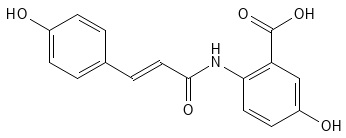
Figure 1 Chemical structure of avenanthramide A (2p), composed of p-coumaric acid (the left part of the structure up to the nitrogen atom) linked to 5-hydroxyanthranilic acid through an amide bond.
Oats also contain saponins – including avenacins and avenacosides – which in the plant function as protective compounds. Saponins are bitter-tasting secondary metabolites with both a lipophilic and a hydrophilic part, which means that they have properties similar to emulsifiers and surfactants and may therefore have a mild cleansing effect.
Vitamins and Minerals
In addition, oats contain vitamins such as B1 (thiamine), B3 (niacin), B5 (pantothenic acid), vitamin E (especially alpha-tocopherol) and vitamin K – particularly concentrated in the bran fraction. Oats also contain minerals such as iron, calcium, potassium, magnesium, phosphorus, zinc, copper and silicon.
Oat Ingredients for Cosmetics
A wide range of ingredients can be produced from oats and their different plant parts, and in cosmetics it is primarily the oat kernel that is used as the raw material. The products range from relatively complex ingredients, where large parts of the grain’s natural composition are preserved, to more refined ingredients in which specific groups of compounds are isolated while others are removed. Most oat-based cosmetic ingredients are nevertheless chemically complex and contain many different molecules.
The term “colloidal oatmeal” often appears in the literature from both the cosmetic and dermatological fields. It refers to very finely ground oat flour made from the entire edible oat kernel—that is, dehulled oats. A brief description of the manufacturing process is that it is a powder obtained by milling and processing the whole oat grain.
Production can take place via a dry process, in which the grain is milled very finely. In this process, the natural lipid content may make it technically difficult to achieve sufficiently small particles. Alternatively, a wet process may be used, which can involve a preliminary extraction step and possibly boiling in water, after which the material is further processed into a very finely milled product.
Colloidal oatmeal therefore does not have a very specific chemical composition. However, the FDA has established certain physical standards for colloidal oatmeal in an OTC monograph for skin-protectant products8 as follows: no more than 3% of the particles may exceed 150 µm, and no more than 20% may exceed 75 µm in diameter. Overall, the chemical composition of colloidal oatmeal is similar to that of the whole oat grain and therefore consists primarily of starch and about 15% protein, about 5% lipids, and about 5% beta-glucans. It may also contain secondary metabolites such as flavonoids, avenanthramides and saponins. Manufacturers of colloidal oatmeal have relatively wide freedom to design their own production processes, and therefore there can be considerable variation in both the chemical composition and the properties of different colloidal oatmeal products.
Colloidal oatmeal has a long history of use and is known for its anti-itch, anti-inflammatory, antioxidant and barrier-supporting properties. It is also one of the few natural products recognized by the FDA in the United States as a safe over-the-counter product for protection of the skin.
In addition to colloidal oatmeal, various extracts and other ingredients are also produced that contain more or less specific fractions of oats. Extracts of oat sprouts, for example, have been studied in vitro in relation to skin barrier function and allergic contact dermatitis. In these studies, researchers have observed, among other things, increased gene expression of proteins associated with skin barrier formation, such as filaggrin9, as well as immunomodulatory effects. In particular, two saponins (avenacoside B and 26-deglucoavenacoside B) and the flavonoid isovitexin-2-O-arabinoside were highlighted in one study as possible contributors to the observed anti-inflammatory effects, including reductions in IL-6, TNF-α and IFN-γ10.
Ingredients based on isolated oat proteins have also been developed, including hydrolyzed proteins, where the proteins have been broken down into smaller peptides and amino acids. In addition, there are various products based on, for example, oat lipids and oat products in which beta-glucans or phenolic compounds have been concentrated and possibly fully isolated.
Overall, oat-based cosmetic ingredients therefore range from whole, minimally processed grain products to specialized fractions focusing on specific molecular groups that in studies have shown particular biological effects.
4More information about the importance of different lipids for the skin can be found in the description of lipids on this website
5More information about the different amino acids and peptides can be found in the descriptions on this website
6Phenolics are a very large group of compounds, all of which contain one or more hydroxyl groups (–OH) directly attached to an aromatic ring, which is a ring-shaped structure with delocalized electrons. An example of an aromatic ring is a six-membered benzene ring. Phenolic compounds can consist of one or more hydroxylated aromatic rings.
7More about antioxidants can be read in the description on this website
8FDA stands for the Food and Drug Administration and is the United States’ federal food and drug authority. OTC stands for Over The Counter – non-prescription medicines in the U.S. FDA issues monographs for OTC drugs, which set regulatory standards for, for example, composition and in some cases what must be stated on the product.
9Filaggrin is an important protein in the epidermis (the outermost layer of the skin), crucial for the skin’s barrier function, pH, and ability to retain moisture. More about filaggrin can be read on this website
10TNF stands for Tumor Necrosis Factor, and TNF-α is a proinflammatory cytokine that plays a central role in the immune system. IFN stands for Interferon, and IFN-γ is a cytokine involved in regulating the immune response against viruses, bacteria, and tumors.
General Skin Properties and Mechanisms of Action
Oats have for centuries been used for the care of dry, irritated and itchy skin – particularly in the form of colloidal oatmeal. Today, both in vitro and clinical studies show that oat ingredients may exert anti-inflammatory, anti-itch, pH-regulating, antioxidant and skin barrier–supporting properties and may also positively influence the skin microbiome11.
The anti-inflammatory effects of oats are particularly attributed to avenanthramides, as these have been shown in in vitro studies to modulate key inflammatory signaling pathways. Avenanthramides have been shown to inhibit IL-1β-induced activation of NF-κB, which regulates the expression of a wide range of pro-inflammatory genes. By reducing NF-κB activation, the production of cytokines such as IL-6, IL-8 and MCP-112 is reduced, which overall contributes to a downregulation of the inflammatory response in the skin. Avenanthramides are probably not the only compounds in oats with anti-inflammatory effects. For example, an in vitro study has shown that both the lipophilic fraction and the hydrophilic fraction (which mainly contains proteins and carbohydrates) could reduce IL-8 production in human keratinocytes.
The antioxidant activity of oats is likewise primarily linked to avenanthramides as well as other phenolic compounds. In cell models it has been demonstrated that a phenol-rich fraction of oats could significantly reduce UV-induced production of reactive oxygen species (ROS13), indicating a protective effect against oxidative stress. Since oxidative stress is often closely linked to inflammatory processes, the antioxidant activity likely contributes to the overall anti-inflammatory effect.
The anti-itch effect is also believed to be associated with avenanthramides. In addition to inhibiting inflammatory cytokines, in vitro studies have shown that avenanthramides can inhibit neurogenic inflammation – a form of inflammatory response mediated via the nervous system that can lead to vasodilation, histamine release and consequently redness and itching. In animal models, topical treatment with low concentrations of avenanthramides has been shown to significantly reduce both inflammation and itching. Inflammation and itching are often associated, and with regard to the anti-itch effect, avenanthramides are probably not the only active compounds in oats.
Oat components have in vitro been shown to induce genes related to epidermal differentiation, tight junctions and lipid regulation – all key elements in the formation of the skin barrier. In particular, phenolic and protein-rich fractions have in one study been associated with these gene induction effects.
Beta-glucan contributes with pronounced water-binding properties that increase skin hydration and support the skin barrier function. In addition, an in vitro study has shown that beta-glucan can interact with macrophages and fibroblasts, thereby stimulating the production of pro-collagen – both indirectly via IL-1 signaling and directly via fibroblast receptors.
Colloidal oatmeal has also been shown to increase the skin’s pH buffering capacity14 – this property is particularly associated with water-soluble proteins and carbohydrates from oats. Regulation of skin pH is important for maintaining barrier function, enzyme activity in the stratum corneum, and is also important for the skin microbiome.
With regard to the microbiome, a clinical study involving individuals with eczema has shown that colloidal oatmeal may positively influence the skin microbiome. Compounds such as beta-glucan can act as prebiotics and thereby promote the growth of certain beneficial bacteria. One study showed that colloidal oatmeal increased the growth of Staphylococcus epidermidis significantly more than Staphylococcus aureus – overgrowth of Staphylococcus aureus is associated with eczema-affected skin.
11More information about the skin microbiome, as well as pre-, pro-, and post-biotics, can be found in the description on this website
12IL-1β stands for Interleukin-1beta, which is a proinflammatory cytokine. NF-κB stands for Nuclear Factor kappa B, a protein complex that plays a key role in regulating genes involved in immune responses, inflammation, and more. IL-6 and IL-8 stand for Interleukin 6 and 8, respectively, while MCP-1 stands for Monocyte Chemoattractant Protein-1, which is important for attracting immune cells during inflammation.
13ROS stands for Reactive Oxygen Species.
14More about the importance of pH can be read in the description on this website
Safety and Allergenic Potential
Oats are generally considered safe both for consumption and for topical use in cosmetics. Several studies have shown that ingredients based on colloidal oatmeal have a very low potential for irritation and sensitisation. In a series of studies, including patch tests, 12 products containing colloidal oatmeal were tested in a total of 2,291 individuals. The results showed very low irritation and no recorded allergic reactions; only a few participants exhibited mild irritation.
Although the risk is considered low, rare cases of both type I allergy (immediate hypersensitivity) and type IV allergy (contact allergy) to oats have been reported in the literature – approximately ten cases in total. Most of these cases occurred in patients with contact allergy or a compromised skin barrier, for example in individuals with atopic eczema, where the risk of sensitisation may potentially be increased. The specific components responsible for the allergic reactions have not been definitively identified, but oat proteins are considered possible candidate allergens. In a small study involving three allergic individuals, an Avena sativa extract from which the proteins had been removed did not trigger an allergic reaction.
Oats are frequently used in products for children with atopic eczema. In a small study involving 24 infants who used a mild cleansing product containing 2% colloidal oatmeal for four weeks (at least three baths per week and no more than one bath per day), significant improvements in dryness, redness and irritation were observed, with no product-related adverse effects.
Use in Problematic and Inflamed Skin
Colloidal oatmeal is widely used for the care of dry, itchy, and irritated skin. In atopic eczema – characterized by dry, itchy skin, a compromised barrier, elevated pH, and often a dysbiotic microbiome with increased levels of Staphylococcus aureus – several clinical studies over the years have demonstrated relevant positive effects.
In a randomized 14-day study including 61 participants with mild to moderate eczema, half received a 1% colloidal oatmeal eczema cream, while the other half were treated with a standard moisturizing cream. Treatment with the oatmeal product resulted in a reduction in eczema severity compared with the standard cream. Improvements were also observed in skin pH, barrier function, and hydration, alongside a trend toward reduced prevalence of Staphylococcus bacteria and increased microbiome diversity in the treated areas.
In another larger study involving 139 patients with different types of itchy eczema, regular baths containing colloidal oatmeal over a three-month period resulted in complete or near-complete relief of itch in more than 71% of participants. A study involving burn patients showed that a bath oil containing 5% colloidal oatmeal in paraffin oil produced a significant reduction in itch compared with the group using a placebo bath oil without colloidal oatmeal.
Inflamed skin often exhibits a higher pH than normal skin. Topical application of certain oat ingredients has been shown to lower skin pH through a buffering effect, helping to restore the skin’s normal acid mantle. One study suggested that this pH-buffering effect is particularly linked to the water-soluble fraction of colloidal oatmeal, which is rich in carbohydrates and proteins.
Effects on Signs of Aging and Skin Structure
Colloidal oatmeal and, in particular, more specific oat ingredients have also been investigated for their effects on skin aging, which is often associated with reduced barrier function, altered lipid and ceramide composition, lower pH-buffering capacity, decreased collagen quantity and quality, reduced amounts of hyaluronic acid and elastin, and diminished epidermal differentiation15.
Lipophilic oat compounds have been shown to activate genes involved in epidermal differentiation, lipid synthesis, and ceramide processing. In a 56-day clinical study, a lipophilic oat ingredient rich in polar lipids (including around 4% ceramides and 20% phospholipids) as well as sterols, and avenanthramides, applied at 1% in a serum, improved skin barrier quality, increased hydration, and raised levels of hyaluronic acid and ceramides in the epidermis. In an 84-day placebo-controlled trial with the same serum, a significant reduction in facial wrinkles was observed, while another study using 1.4% of the lipophilic oat ingredient reported a reduction in UV-induced erythema as well as protection against UV-induced erythema.
Another lipophilic oat ingredient with a relatively high content of phytosterols, ceramides, and vitamin E demonstrated improvement in hand skin damage caused by frequent washing in a 28-day placebo-controlled study using 5% in a hand cream.
Beta-glucan has also been evaluated for its effects on wrinkles. In an 8-week placebo-controlled clinical trial, 0.1% sub-micron filtered oat beta-glucan in a gel significantly reduced fine lines and wrinkles compared with baseline and placebo. In a 56-day placebo-controlled study, a serum containing 1% of a beta-glucan-rich oat ingredient improved skin surface structure and reduced wrinkle appearance.
Proteins and peptides from oats have likewise been studied in relation to skin aging. A specific oat peptide ingredient containing about 90% peptides (mainly low- and medium-molecular weight, 300–3000 Da) increased collagen types I, III, and V, as well as elastin, in ex vivo studies at 0.1%16. In an 84-day placebo-controlled clinical trial, 0.1% of this peptide ingredient in a facial cream significantly increased hydration, improved density, structural integrity, firmness, and elasticity, while markedly reducing the appearance of wrinkles.
Application for Scalp and Hair
The use of oats in hair and scalp care products has been studied less extensively than its dermatological applications, but several studies indicate relevant benefits. For example, an in vitro study of an oat-derived ingredient rich in beta-glucan, starch, and amino acids demonstrated inhibitory effects against the yeast Malassezia furfur, which is often a contributing cause of dandruff. The same ingredient also has water-binding properties that can increase hair moisture levels while helping to protect and strengthen the hair fiber.
A specific extruded colloidal oatmeal ingredient17 (containing approximately 60% starch, 7% lipids, 5% beta-glucan, 0.015% saponins, and 0.008% avenanthramides) was evaluated in a 28-day placebo-controlled study. When included at 1% in a leave-on scalp treatment, it reduced itching, redness, and irritation in individuals with sensitive scalp. When incorporated at the same concentration in a rinse-off conditioner, the ingredient significantly strengthened damaged hair compared with the placebo product. In addition to its scalp effects, the ingredient also demonstrated moisturizing properties, reduced redness and irritation, and supported skin barrier function. Furthermore, the previously mentioned lipophilic oat ingredient with a relatively high content of phytosterols, ceramides, and vitamin E was shown to protect hair ceramides from the UV-induced degradation that normally occurs when hair is exposed to UV radiation, while also increasing hair shine and softness.
Oats have a long tradition of use in cosmetic formulations and are now well documented as a multifunctional ingredient with a complex and biologically active composition. The content of compounds such as beta-glucans, avenanthramides, ceramides, phytosterols, peptides, and antioxidants help explain the wide range of reported effects – from anti-inflammatory and antioxidant activity to itch relief, barrier support, and beneficial effects on the skin microbiome. Oats are also generally regarded as a safe cosmetic ingredient with a very low risk of irritation or sensitization, even when used on sensitive or atopic skin. Overall, the available evidence suggests that oats – both in skincare and haircare – function not only as a traditional soothing ingredient but also as an active component with documented biological effects on skin structure, function, and balance.
15Epidermal differentiation is the complex, ordered process in which stem cells in the basal layer of the epidermis (stratum basale) mature, migrate upwards, and transform into functional skin cells (keratinocytes) in the upper layers. This process involves significant changes in gene expression, particularly the production of keratin, which helps ensure the skin’s barrier function. More about this interesting process can be read on the website
16More about collagen can be read on the website
17Extrusion is a manufacturing process in which the material is pressed through a shaped die to form it and give it a desired structure.
Sources
- Alemayehu, G. F.; Forsido, S. F.; Tola, Y. B. & Amare, E. Nutritional and Phytochemical Composition and Associated Health Benefits of Oat (Avena sativa) Grains and Oat-Based Fermented Food Products. The Scientific World Journal, 2023, 2730175.
- Allais, B. & Friedman, A. Colloidal Oatmeal Part I: History, Basic Science, Mechanism of Action, and Clinical Efficacy in the Treatment of Atopic Dermatitis. Journal of drugs in dermatology: JDD, 2020, 19(10), 4–7.
- Bruusgaard-Mouritsen, M. A.; Johansen, J. D.; Zachariae, C.; Kirkeby, C. S. & Garvey, L. H. Natural ingredients in cosmetic products-A suggestion for a screening series for skin allergy. Contact dermatitis, 2020, 83(4), 251–270.
- Capone, K.; Kirchner, F.; Klein, S. L. & Tierney, N. K. Effects of Colloidal Oatmeal Topical Atopic Dermatitis Cream on Skin Microbiome and Skin Barrier Properties. Journal of drugs in dermatology: JDD, 2020, 19(5), 524–531.
- Cerio, R.; Dohil, M.; Jeanine, D.; Magina, S.; Mahé, E. & Stratigos, A. J. Mechanism of action and clinical benefits of colloidal oatmeal for dermatologic practice. Journal of drugs in dermatology: JDD, 2010, 9(9), 1116–1120.
- CIR Expert Panel: Becker, L. C. al. Safety Assessment of Avena Sativa (Oat)-Derived Ingredients as Used in Cosmetics. International journal of toxicology, 2019, 38(3 Suppl), 23S–47S.
- CIR Expert Panel: Fiume, M. M. al. Safety Assessment of Microbial Polysaccharide Gums as Used in Cosmetics. International journal of toxicology, 2016, 35(1 Suppl), 5S–49S.
- Criquet, M.; Roure, R.; Dayan, L.; Nollent, V. & Bertin, C. Safety and efficacy of personal care products containing colloidal oatmeal. Clinical, cosmetic and investigational dermatology, 2012, 5, 183–193.
- Fowler J. F., Jr. Colloidal oatmeal formulations and the treatment of atopic dermatitis. Journal of drugs in dermatology: JDD, 2014, 13(10), 1180–1185.
- Gafner, F.; Schweikert, K. & Dell’Acqua, G. Oat-based complex stimulates skin barrier protein synthesis and reduces skin ageing. International Journal of Cosmetic Science, 2009, 31. 403-403.
- Gombert, E. & Dewis, C. Investigation into the delivery and evaluation of a unique Avena sativa (Oat) Lipid Extract on skin barrier using LC‒MS/MS, Raman spectroscopy, immunostaining analysis and skin efficacy.International journal of cosmetic science, 2025, 10.1-18.
- Ilnytska, O.; Kaur, S.; Chon, S.; Reynertson, K.; Nebus, J.; Garay, M.; Mahmood, K. & Southall, M. Colloidal Oatmeal (Avena Sativa) Improves Skin Barrier Through Multi-Therapy Activity. Journal of drugs in dermatology: JDD; 201615. 684-690.
- Kim, H.-S.; Hwang, H.-J.; Seo, W.-D. & Do, S.-H. Oat (Avena sativa) Sprouts Restore Skin Barrier Function by Modulating the Expression of the Epidermal Differentiation Complex in Models of Skin Irritation. International Journal of Molecular Sciences, 2023, 24(24), 17274.
- Kurtz, E. S. & Wallo, W. Colloidal oatmeal: history, chemistry and clinical properties. Journal of drugs in dermatology: JDD, 2007, 6(2), 167–170.
- Mack, M. C.; John, G.; Friscia, D., Perna, C.; Bion, D.; Ailsworth, M.; Peddy, K. & Tierney, N. K. A colloidal oat-containing baby wash is gentle and effective for atopic-prone skin. International journal of cosmetic science, 2026, 48(1), 30–39.
- Nwachukwu, I. D.; Devassy, J. G.; Aluko, R. E. & Jones, P. J. Cholesterol-lowering properties of oat β-glucan and the promotion of cardiovascular health: did Health Canada make the right call?. Applied physiology, nutrition, and metabolism, 2015, 40(6), 535–542.
- Oat Cosmetics: AvenaPLex-Data-Pack-0825-LR: AvenaPlex data pack; revision nr 14, 26th August 2025.
- Oat Cosmetics: EcoPep-Skin-Data-Pack-0325-LR: EcoPep data pack; revision nr 1, 3rd March 2025.
- Oat Cosmetics: Glucaveen-Data-Pack-0624-LR: Glucaveen data pack; revision nr 5, 17th June 2024.
- Oat Cosmetics: Oat-COM-Data-Pack-0824-LR: Oat COM data pack; revision nr 7, 30th August 2024.
- Oat Cosmetics: Oat-Lipid-e-Datapack-0924-LR: Oat Lipid e data pack; revision nr 7, 19th July 2024.
- Oat Cosmetics: Rejuvaveen-DataPack-0925-LR: Rejuvaveen data pack; revision nr 4, 15th September 2025.
- Pillai, R.; Redmond, M. & Röding, J. Anti‐Wrinkle Therapy: Significant New Findings in the Non‐Invasive Cosmetic Treatment of Skin Wrinkles with Beta‐ International Journal of Cosmetic Science, 2005 27. 292 - 292.
- PubChem Sketcher V2.4. Lokaliseret 17. Februar 2026: https://pubchem.ncbi.nlm.nih.gov
- Reynertson, K. A.; Garay, M.; Nebus, J; Chon, S.; Kaur, S.; Mahmood, K.; Kizoulis, M. & Southall, M. D. Anti-inflammatory activities of colloidal oatmeal (Avena sativa) contribute to the effectiveness of oats in treatment of itch associated with dry, irritated skin. Journal of drugs in dermatology: JDD, 2015, 14(1), 43–48.
- Sur, R.; Nigam, A.; Grote, D.; Liebel, F. & Southall, M. D. Avenanthramides, polyphenols from oats, exhibit anti-inflammatory and anti-itch activity. Archives of dermatological research, 2008, 300(10), 569–574.
- Vansina, S.; Debilde, D.; Morren, M. A. & Goossens, A. Sensitizing oat extracts in cosmetic creams: is there an alternative?. Contact dermatitis, 2010, 63(3), 169–171.
- Website af LisaLise Pure Natural Skincare: What Makes Colloidal Oatmeal Colloidal? Skrevet 31. Juli, 2023. Lokaliseret 23. Januar 2026: What Makes Colloidal Oatmeal Colloidal? — LisaLise Pure Natural Skincare.
- Wikipedia websites: Oat, Almindelig havre & Beta-glucan. Lokaliseret 20. Januar 2026: https://en.wikipedia.org/wiki/Oat, https://da.wikipedia.org/wiki/Almindelig_havre & https://en.wikipedia.org/wiki/Beta-glucan.
- Wood PJ, Beer MU, Butler G. Evaluation of role of concentration and molecular weight of oat β-glucan in determining effect of viscosity on plasma glucose and insulin following an oral glucose load. British Journal of Nutrition. 2000;84(1):19-23.